Re-Founding Incumbents for the AI Era with Sequence Holdings Co-Founder and CEO Michael Lee
Michael Lee sees AI as a major economic shift whose effects will often emerge through established businesses, if they can use the technology to redesign their organizations. He argues that doing so requires engineering-centered cultures, sustained capital, and leaders willing to change how work is organized. Examples from insurance, lending, and private equity illustrate how business incentives and time horizons can shape that transformation.
Preview · 14 more points in the app
Read the Full SummaryKey Takeaways
Lee sees AI as an industrial-revolution-scale technology whose effects will often reach people through established businesses, not only through model companies. Because AI-enabled machines can work continuously and scale with electricity, he argues that incumbents need to redesign their organizations to use the technology, rather than simply add it to existing workflows.
Lee argues that AI transformation requires engineering expertise to shape both company culture and organizational decisions, but several existing models can impede that shift: services firms may favor incremental client work, packaged software is built for current workflows, and PE firms can struggle to recruit engineers into investor-centered environments. He says companies pursuing AI-driven refounding should make engineers central to their culture.
Lee says Sequence’s holding-company structure is intended to share frontier engineering across partner and portfolio companies while matching capital duration to sustained operational commitments. That approach contrasts with his view that PE firms often begin preparing to sell after about three years, a timeframe he says differs from what technological transformation requires.
TECHNOLOGY
“You know, I share that context because, you know, when the models came out or ChatGPT came out at the end of twenty two, you know, what became obvious to…”—
“But there, as a student of business, there have always been certain industries where I felt like the incumbent had all the advantages, and that could be brand, that could…”—
“So like if we take a giant step back, you know, and at least at sequence, when we think about what's happening with AI today, we think we're living through…”—
ECONOMY
“The insurance industry since the beginning of time has almost made no money underwriting and has made the principal amount of their money through investing…”—
“Another interesting feature about the brokerage industry is that your customer doesn't actually pay you. The carrier does…”—
MARKETS
“You know, as you can imagine, in a take private scenario, you do need to have certainty of capital…”—
“And that was a really, really powerful kind of five years that I did at Lone Pine around studying the greatest companies in the world, and like really deeply internalizing…”—
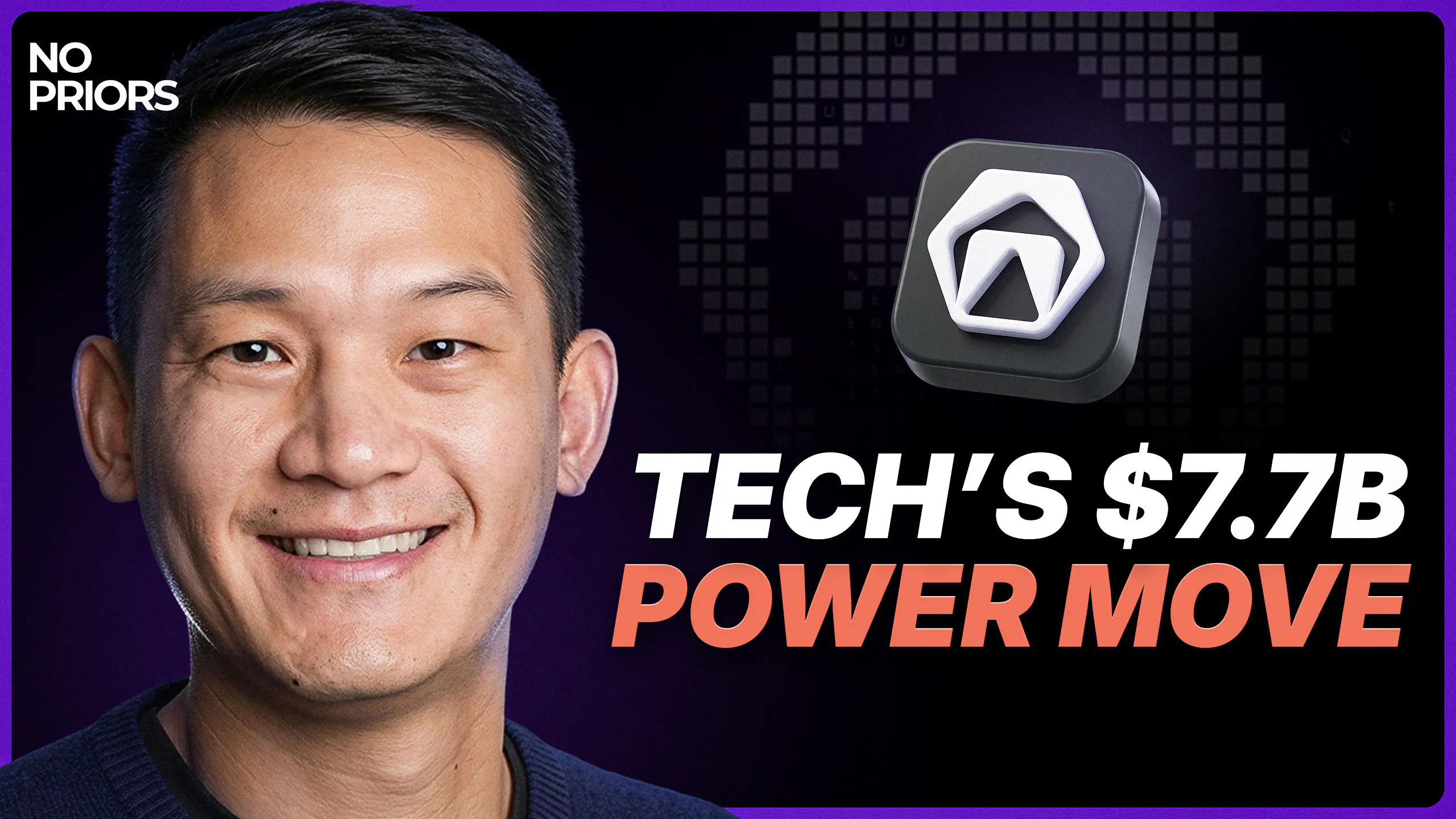
Sequence's AI Buyout Thesis
Lee describes Sequence's Baldwin transaction and explains how his investment experience led him to believe AI could help incumbent businesses become market leaders.
AI's Uneven Economic Impact
Lee argues that AI will affect industries differently and that acquiring incumbents with durable advantages can be a path to building category leaders.
Why Sequence Owns Businesses
Lee says AI transformation requires redesigning organizations, and that a permanent holding company aligns ownership, engineering investment, and long time horizons.
Engineering-Led Transformation
Lee contrasts ownership with internal efforts, consultants, and off-the-shelf software, arguing that only an aligned, engineering-centered model can remake workflows and incentives.
Bank South's First Partnership
Lee explains how Bank South became Sequence's first investment and why the shift from a services engagement to ownership enabled deeper engineering work and employee buy-in.
Banking's Organizational Advantages
Lee says banking's clear rules, strong data, and centralized operations make it a useful environment for deploying agents and spreading technology across a business.
Insurance Brokerage's Incumbent Edge
Lee explains why brokerage fits Sequence's criteria: a huge market, relationship-driven retention, and structural advantages that make it difficult for startups to displace incumbents.
Atlas Platform and Change Management
Lee outlines Atlas's reusable data, agent, orchestration, and application layers, while stressing that employee trust and organizational change are the harder part of transformation.
Sequence Versus Private Equity
Lee distinguishes Sequence from fund-based firms through its long horizon, engineering-centered culture, selective deal pace, and focus on building market leaders.
Management Teams for AI Change
Lee prioritizes strong operators who already embrace technology and have taken steps such as centralizing data and introducing AI tools across their organizations.
Bank South's Lending Results
Lee reports that AI systems cut consumer underwriting time by 94% and shortened commercial loan processing, allowing Bank South to handle more volume without relaxing standards.
From Investing to Operating
Lee reflects on the empathy and resilience required to build a company, then describes how the Dell family office brought capital and support to the Baldwin transaction.
Backing Exceptional People
Lee concludes that execution depends on exceptional people tackling hard problems in large markets, citing Jensen Huang as an example of leadership and continual reinvention.
Related Episodes




Important Disclaimers
Not Investment Advice: For education only — not financial, tax or legal advice.
AI-Generated: Made by AI from source transcripts and may contain errors.
No Guarantees: Past performance does not predict future results; investing carries risk.
Our Commentary · Request Removal