Three years after October 7, with Aaron David Miller
The discussion examines eroding U.S. support for Israel, deep divisions over Gaza’s future, and the humanitarian and political constraints shaping the conflict. Speakers also address regional security, including Iran’s leverage over shipping routes, Saudi efforts to build resilience, and a proposed nuclear deal. Later comments focus on the U.S. political impact, rising safety concerns among American Jews, and competing calls for diplomacy and a peace roadmap.
Preview · 26 more points in the app
Read the Full SummaryKey Takeaways
Signs of weakening U.S. support for Israel include a House vote to eliminate $3.3 billion in annual aid that drew 103 Democratic votes and Gallup’s finding that more Americans sympathized with Palestinians than Israelis; Aziz Abu Sarra says Israel-Palestine has also become a major issue in U.S. congressional elections. Separately, a speaker says more Americans now have a negative view of Israel than at any earlier point, and a cited survey found that 91% of American Jews feel less safe than they did in 2023.
Miller says a change in Israel’s government might ease some of the toxicity in U.S.-Israel ties but may not restore Israel’s image or its lost benefit of the doubt; Bremmer notes that military, intelligence, and aid ties remain deeply integrated. Miller also argues that Netanyahu and Trump have undermined the relationship’s bipartisan foundation.
Miller describes Gaza’s postwar challenge as both a population and governance problem: roughly 2 million Palestinians are concentrated in 30% to 35% of the territory, while Israel and Hamas have irreconcilable visions for security, governance, and reconstruction. He says 5,000 Palestinian police who are supposed to be trained have not left Gaza, which he believes reflects Israel’s failure to assure them they could return.
Miller says Gaza’s humanitarian conditions have improved but food insecurity, inadequate medical access and shelter, disease, and limited potable water persist after three years of disrupted normal life. He also says Hamas retains political capacity through guns, humanitarian assistance, and the black market despite major degradation of its military capabilities, and warns that Gaza’s future looks grim without a fundamental leadership change.
GEO-POLITICS
“Democratic voters have become more critical of Israel, and in July, 103 house Democrats, nearly half the caucus, voted to eliminate $3,300,000,000 in annual aid to Israel…”—
“For the first time ever in Gallup's polling, more Americans now sympathize with Palestinians than Israelis, especially young Americans…”—
“Those two visions are fundamentally irreconcilable on the issue of security, on the issue of governance, and on the issue of Reconstruction, which are the three basic dimensions that the…”—
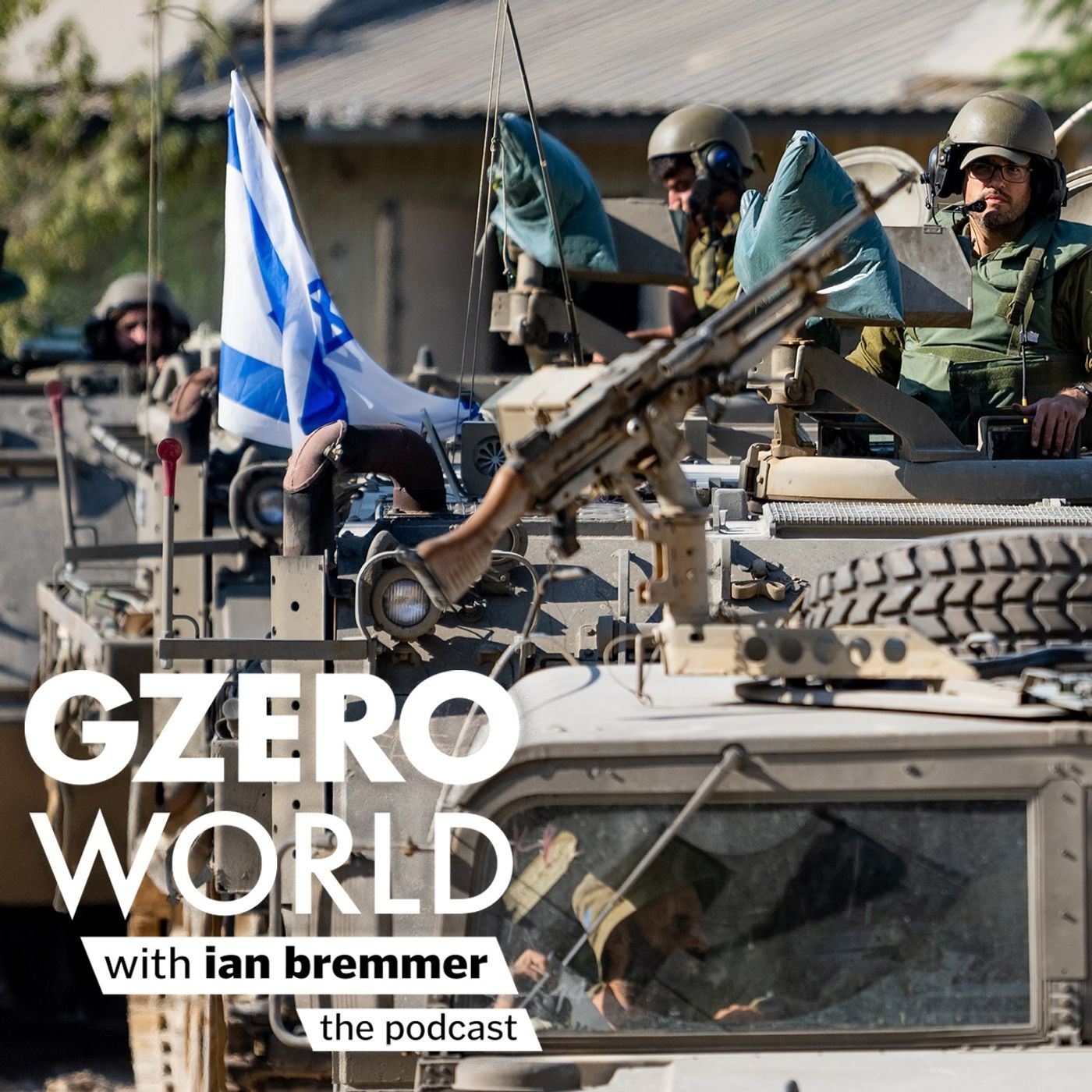
Israel's Diplomatic Isolation
Ian Bremmer describes Israel's growing international isolation, weakening U.S. bipartisan support, and the stakes of the coming Israeli election.
Gaza's Humanitarian Crisis
Miller says conditions have improved somewhat but remain dire, with food insecurity, inadequate shelter and medical care, disease, and severe disruption to ordinary life.
Hamas's Enduring Control
Miller argues Hamas retains influence through control of weapons, aid, and local networks, while Palestinian political weakness and authoritarian leadership limit alternatives.
Israel's Election Outlook
Miller expects a new Israeli government could make limited domestic changes but would be unlikely to transform policy toward Gaza, Lebanon, or Iran.
U.S.-Israel Bipartisan Rift
Miller says Netanyahu and Trump have weakened the bipartisan foundation of U.S.-Israel ties, while Israel's diminished public standing has coincided with rising antisemitism.
Middle East Power Imbalance
Miller calls for changes in U.S. and Israeli leadership and describes a fractured region where Turkey, Iran, and Israel are unusually capable of projecting power.
Iran's Regional Leverage
Miller points to Iran's military reach and influence over the Strait of Hormuz and Bab el-Mandeb, while Bremmer argues Gulf states will build resilience and alternatives.
Leadership and Israeli Security
Miller argues that leaders who treat military force as a means rather than an end could improve Israel's credibility, though deep political and security anxieties constrain change.
Grief Across Communities
Tony Masillas introduces Israeli Maoz Inon and Palestinian Aziz Abu Sarra, whose personal losses led them to reject vengeance and build a friendship.
A Shared Journey
The friends describe how their relationship developed and how sharing distinct Israeli and Palestinian histories can acknowledge anger while humanizing one another.
Facing Difficult Narratives
The authors welcome criticism and say their book presents painful accounts on both sides to challenge stereotypes rather than offer readers an easy or comfortable story.
U.S. Politics and Antisemitism
Abu Sarra says pro-Palestinian protests reveal shifting U.S. attitudes and affect American politics, while Inon calls for Jews, Muslims, and Christians to confront antisemitism together.
Diplomacy Over Escalation
The speakers call for political pressure and practical peace efforts, condemn ongoing violence in Gaza and the West Bank, and argue that dialogue must include people often treated as unreachable.
A Roadmap for Peace
Inon outlines a peace process based on shared values, coalition-building, and a roadmap, while Abu Sarra urges supporters to turn their belief in peace into action.
Related Episodes


Important Disclaimers
Not Investment Advice: For education only — not financial, tax or legal advice.
AI-Generated: Made by AI from source transcripts and may contain errors.
No Guarantees: Past performance does not predict future results; investing carries risk.
Our Commentary · Request Removal