The great US-China superpower rivalry, with Elizabeth Economy
Elizabeth Economy describes a U.S.-China rivalry that combines strategic competition with deep economic ties, while arguing that regular diplomacy can add stability and U.S. retrenchment has opened leadership opportunities for China. She sees China as strong in technology and manufacturing but faces a weaker domestic economy, and says the AI leadership outcome remains uncertain, depending partly on how “winning” is defined. U.S. policy priorities include securing strategic manufacturing capacity and maintaining a government-led space strategy, while diversified energy sources and clean-energy deployment have helped insulate China from the Strait of Hormuz disruption.
Preview · 13 more points in the app
Read the Full SummaryKey Takeaways
Economy describes the U.S. and China as deeply connected through trade, investment, technology, and supply chains even as they compete economically and militarily. She says recent summits have produced limited substantive progress, but frequent meetings and communication channels could add stability; she also argues that a clearer U.S. welcome for Chinese investment could create more reason for Chinese CEOs to join U.S. delegations.
Economy says Xi Jinping is pursuing technology leadership and a leading global economic position by 2049, while China is already strong in technology and advanced manufacturing and set a 70% semiconductor self-reliance target for 2025. Against that backdrop, she describes U.S. policy as retaining manufacturing capacity at home or among allies in strategic areas including semiconductors, AI, pharmaceuticals, and critical minerals, while acknowledging that drawing the boundary is imperfect.
Economy says the AI race remains unsettled: the United States has 10 times more data centers than China and roughly comparable domestic AI diffusion, but Chinese models lead in global use and China has its full AI stack ready. She argues that U.S. safety and local-impact concerns should be addressed without treating them as proof of lost leadership, and says U.S. global adoption could improve if the country gets its AI export package right.
GEO-POLITICS
“Beijing and Washington are economic competitors and military rivals, but they're also deeply tied together through trade, investment technology, and their supply chains.”—
“So I would say if I were being ungenerous, what we've seen over the past two summits has probably just been mostly pomp and pageantry over substantive progress…”—
“But I think had there been progress on the board of investment, you may have seen some Chinese CEOs, probably even a substantial delegation coming, trying to seek out new…”—
TECHNOLOGY
“Exactly. Both are true. So I always think I need to look at Chinese ambitions and what's happening on the ground…”—
“When you look back to 2015, made in China 2025, you know, Xi Jinping set as a goal for China to be self reliant…”—
“We have 10 times more data centers than the Chinese do at this point, right? Our diffusion of AI is basically on par with China domestically, not globally…”—
ECONOMY
“At the same time, it kind of stinks to be Chinese right now if you're living inside China…”—
MARKETS
“And I think we've seen that during the Iran conflict, right, where they've not only diversified their sources of, you know, oil. Right?…”—
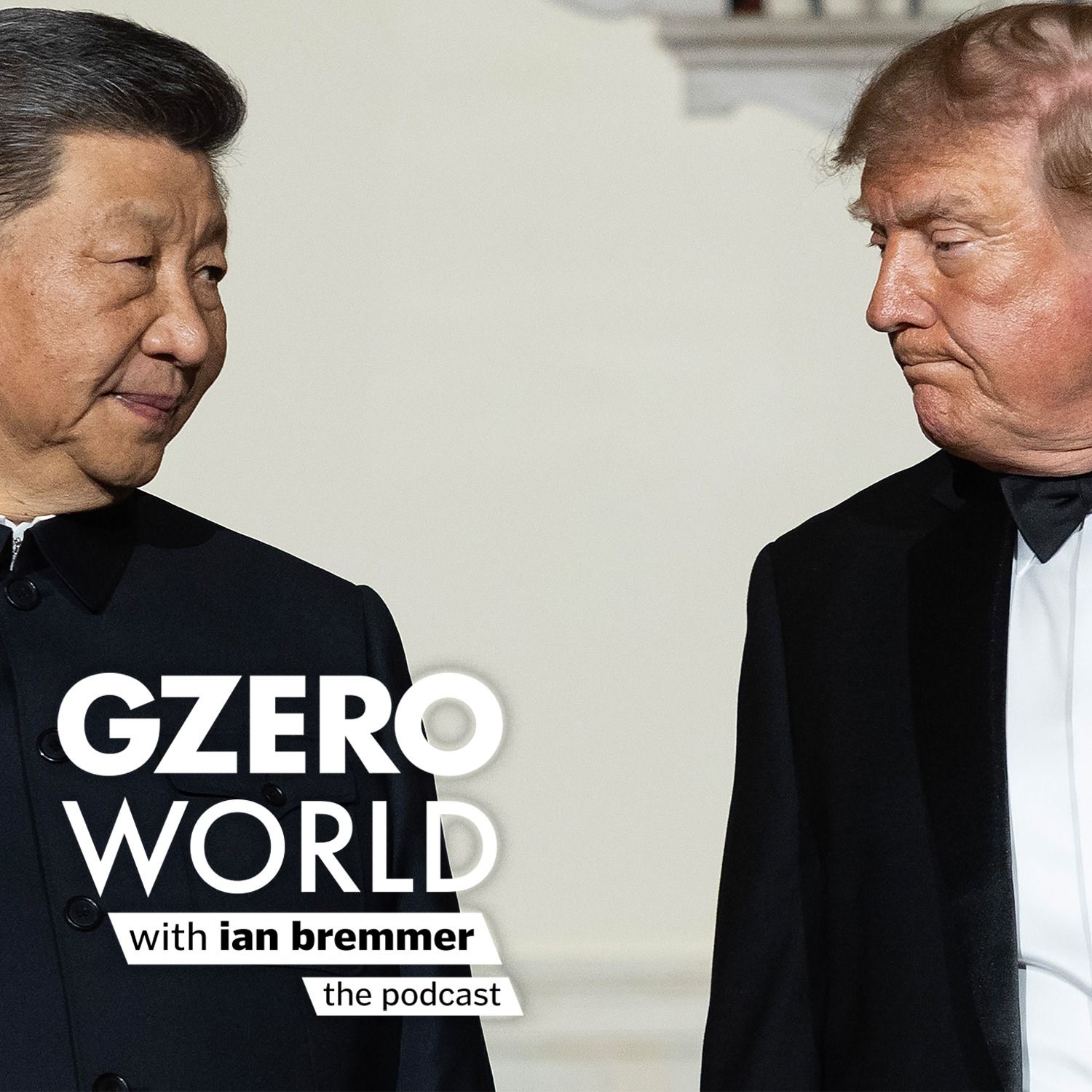
U.S.-China Summit Diplomacy
Bremmer introduces the rivalry and asks whether frequent Trump-Xi meetings can deliver substantive progress; Economy says regular communication may stabilize competition even when summit outcomes are modest.
China Reads Trump’s Return
Economy says the administration’s reduced emphasis on democracy and withdrawal from international institutions create openings for China, while U.S. technology and security competition remains firm.
China’s Economic Strengths And Strains
China leads in advanced manufacturing and clean-energy deployment and has diversified energy supplies, but its households face weak growth, job insecurity, property losses, and limited social support.
China’s Growth Model Trade-Off
Economy argues Xi prioritizes global power and technological control over household welfare, and says coordinated foreign pushback against Chinese overcapacity could make the economic costs more immediate.
U.S.-China Space Competition
Economy says the United States remains competitive in space but should retain government leadership and a coherent strategy, while accepting Chinese achievements rather than seeking to suppress them.
The Uncertain AI Race
Economy says U.S. concerns about AI safety and data-center impacts are warranted, China faces its own constraints, and the eventual leader depends on how success is defined and which systems the world adopts.
Related Episodes






Important Disclaimers
Not Investment Advice: For education only — not financial, tax or legal advice.
AI-Generated: Made by AI from source transcripts and may contain errors.
No Guarantees: Past performance does not predict future results; investing carries risk.
Our Commentary · Request Removal