SAP CEO: AI Won't Kill Software, But It Will Change Your Job — With Christian Klein
Christian Klein argues that enterprise AI depends on accurate, governed systems built around business data and processes, not standalone language models. He describes how AI could reshape planning, controls, cybersecurity, and job requirements, while warning that data quality and European regulation remain challenges. The host also notes SAP shares were down 21% for the year before rising 43% over the preceding two months.
Preview · 19 more points in the app
Read the Full SummaryKey Takeaways
Klein says enterprise AI accuracy requirements depend on the task: SAP targets at least 95% for financial-close and inventory agents, while customer briefings or headcount reports can be useful at 94%. He also says accuracy falls as systems multiply and data quality worsens, making data cleanup and task-specific model selection important.
Klein argues that LLMs alone cannot handle enterprise work such as running a warehouse or completing a financial close; business-process context and governance, including country-specific tax rules, are also needed. He identifies AI governance and regulation as obstacles to address in mission-critical businesses.
Klein says AI is prompting SAP and its customers to rethink processes such as supply chains, inventory optimization, and payroll, while automating some finance and HR controls and adding intelligence to planning and pricing. He expects shorter planning cycles and a different job mix, including hiring data scientists and full-stack developers while reskilling workers; the host argues AI is unlikely to cause mass job loss.
Klein argues SAP must build world-class AI to defend its position as value creation shifts from systems of record toward the AI layer. He says reproducing SAP ERP is difficult because it combines 7 million data fields, hundreds of millions of correlations, and industry- and country-specific processes, with hundreds of millions of dollars invested annually to maintain compliance.
TECHNOLOGY
“And now it's really about, okay, but it's nice to experiment with it, but, you know, all of our customers are now saying, okay, but what is in it? Yeah…”—
“And the third one, I guess, the world is talking about that, do we need to regulate AI? Do we need to govern AI?…”—
“But your auditors, when you release financial results, they say, okay, sorry, this time my numbers were 7%, you know, too high. And they say, what?…”—
ECONOMY
“And the reason is because companies, they have a massive road map. They have so many things they wanna do. They have things their competitors are doing…”—
MARKETS
“And that's what the market seems to have been responding to. I mean, SAP this year is, it's down 21%, but it's been up 43% over the past two months.”—
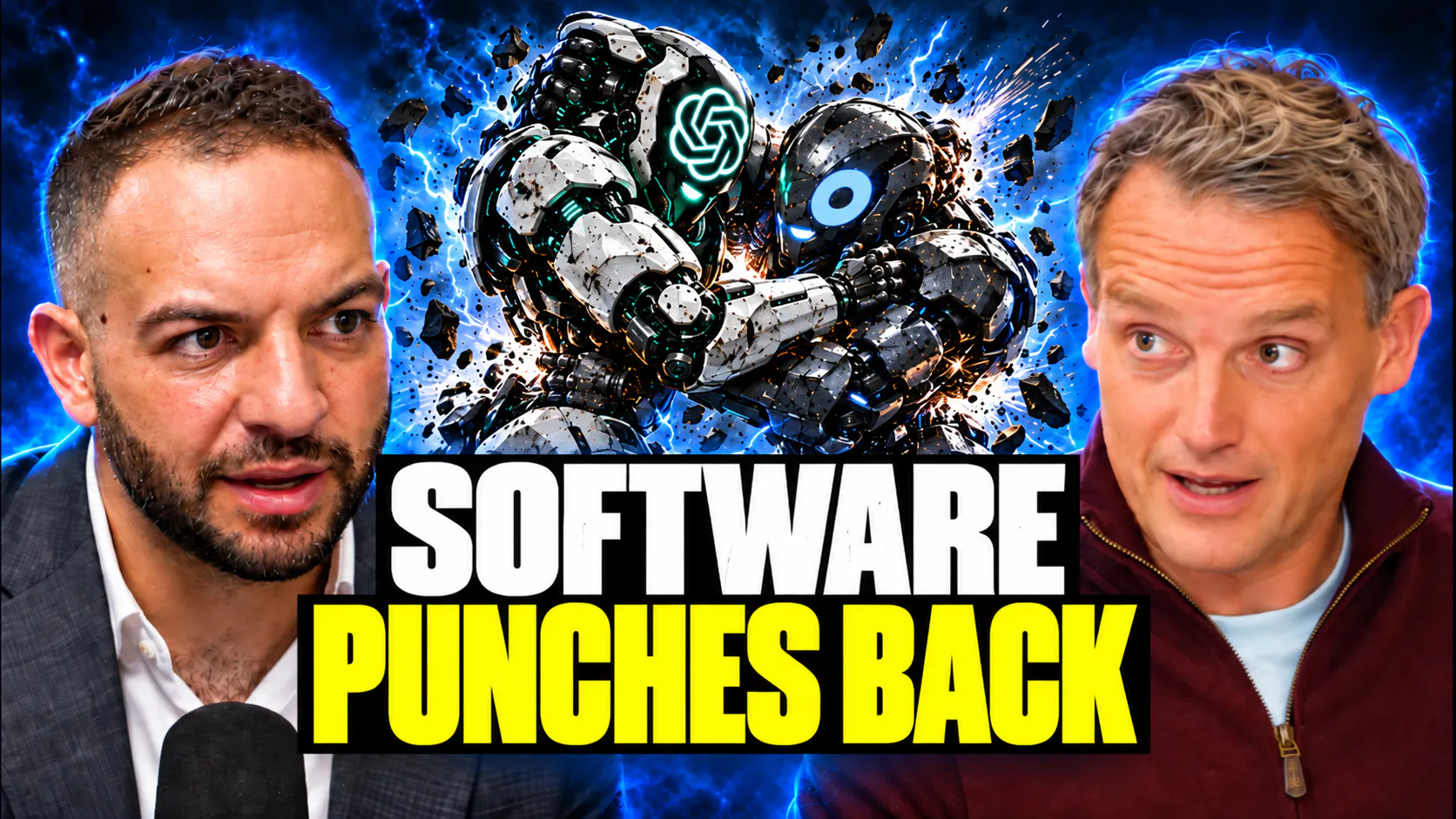
AI's Enterprise Hurdles
Klein says business AI must overcome accuracy, data-quality, and governance challenges before enterprises can trust agents with mission-critical work.
Accuracy Depends on Use
Klein expects high accuracy for specific tasks within months, while explaining that acceptable precision depends on the consequences and purpose of each use case.
Cleaning Enterprise Data
AI can help reconcile data across SAP and outside systems, but fragmented, low-quality data still constrains agent accuracy and business value.
Faster Business Planning
Klein says AI is speeding execution and shortening planning cycles, while also prompting companies to rethink culture and coordinate workforce plans with agents.
Workload and Job Security
Klein expects AI to automate controls and routine work, shifting employees toward higher-value tasks, though workers may still worry about restructuring and job security.
Reskilling SAP Employees
Klein describes changing job profiles at SAP and says reskilling can work when workers receive training, coaching, and a compelling reason to adopt new tools.
Reinventing Software Work
Klein says AI can free product teams to rethink business processes with customers, though not every employee will embrace the shift in work.
Why ERP Resists Vibe Coding
Klein argues that ERP software combines vast data relationships, industry processes, and local compliance requirements that are difficult to recreate with prompting alone.
SAP's AI Foundation
Klein says reliable business agents require language models combined with SAP's data, process knowledge, semantic layers, and governance—not standalone LLMs.
Models, Ontologies, and Access
Klein explains how SAP connects multiple models to business context through its ontology and lets third-party agents access SAP systems through governed gateways.
Software's Market Rebound
Klein says investors are recognizing that LLMs alone lack the application context and governance needed to run businesses, helping software shares recover.
Choosing Models by Cost
SAP switches among frontier, open-source, and specialized models according to each agent's performance, cost, and required accuracy.
Managing AI Token Costs
Klein says SAP set fair usage limits for many roles while exempting critical model-training work, and emphasizes model switching as a stronger cost lever.
Agent Swarms and Cybersecurity
Klein says SAP tests new models and agent collaboration quickly, while treating vulnerability detection, patching, and proactive cybersecurity as top priorities.
Europe's AI Regulation
Klein supports regulating AI's societal impact rather than technology itself, and argues that overlapping EU rules make innovation and startup growth harder.
Related Episodes




Important Disclaimers
Not Investment Advice: For education only — not financial, tax or legal advice.
AI-Generated: Made by AI from source transcripts and may contain errors.
No Guarantees: Past performance does not predict future results; investing carries risk.
Our Commentary · Request Removal