Horizon Robotics CEO: Car Chips, Mind-Off Driving and China's Speed
Horizon Robotics’ business remains concentrated in passenger vehicles, where its chips are deployed in roughly one out of three cars in China. The CEO points to demanding automotive-chip requirements, rapid Chinese platform cycles, and a deep supplier ecosystem as forces shaping development, while arguing that self-driving progress requires more compute, quality data, and larger models. He also sees robotics as a potential response to labor shortages and tedious or dangerous work, with forecasts ranging from hands-free passenger vehicles in China by the end of 2028 to possible tenfold gains in road efficiency.
Preview · 19 more points in the app
Read the Full SummaryKey Takeaways
Kai says Horizon Robotics remains overwhelmingly focused on passenger vehicles—probably 95%, nearly 100%, of its business—and its chips already run in roughly one out of three cars in China. That market is moving quickly: Chinese automakers launched more than 580 models across roughly 60 to 70 brands in the first half of the year, while car-platform production cycles take about two years in China versus typically five years for global OEMs.
Kai says automotive chips are difficult for new entrants because they must meet demanding safety, quality, qualification, and testing requirements, and a new generation typically takes three to four years to develop and prepare for automakers. Horizon pursues innovation in areas such as chip architecture, compilers, and algorithms, but relies on capable partners and established practices for safety-critical automotive work.
Kai says better self-driving depends on advancing onboard computing, high-quality data that captures meaningful corner cases, and larger models—not on improving chips or models alone. The guest predicts all passenger vehicles in China will be hands-free by the end of 2028, while also predicting that coordinated self-driving cars could improve traffic efficiency tenfold if they stop competing for road space.
Kai describes China’s supplier base, partner availability, and close geographic proximity as factors that support fast collaboration and innovation. In that context, he argues that Chinese manufacturing could help U.S. robotics companies innovate faster, favoring cross-border cooperation over a zero-sum view of the robotics race.
GEO-POLITICS
“Now we have a, you know, very competitive product. We need to get into Europe to take their market shares and make money from them. That's also not healthy. Right?…”—
TECHNOLOGY
“So including self driving cars, but of course, our current business is probably, you know, 95, nearly 100% focusing on cars, passenger vehicles.”—
“Now your chips run roughly one out of four cars in China. Just tell me about the One one out of three, I think. That's our latest track record.”—
“There are, you know, I don't know how many, probably 60 or to 70 different car brands…”—
ECONOMY
“Yeah. There's another thing, which is, you know, China is facing very terrible, this Asian society issue. I mean, it's coming so quick, quite unexpectedly. Right. It's a... The problem…”—
FORECASTS
“Your company is called Horizon Robotics. How far is a car from a robot now? Still a little bit long way to go, but not that long. Not that far…”—
“Yeah. And for robots, we are not so much into the software. Yeah. We are supplying chips to the robot companies…”—
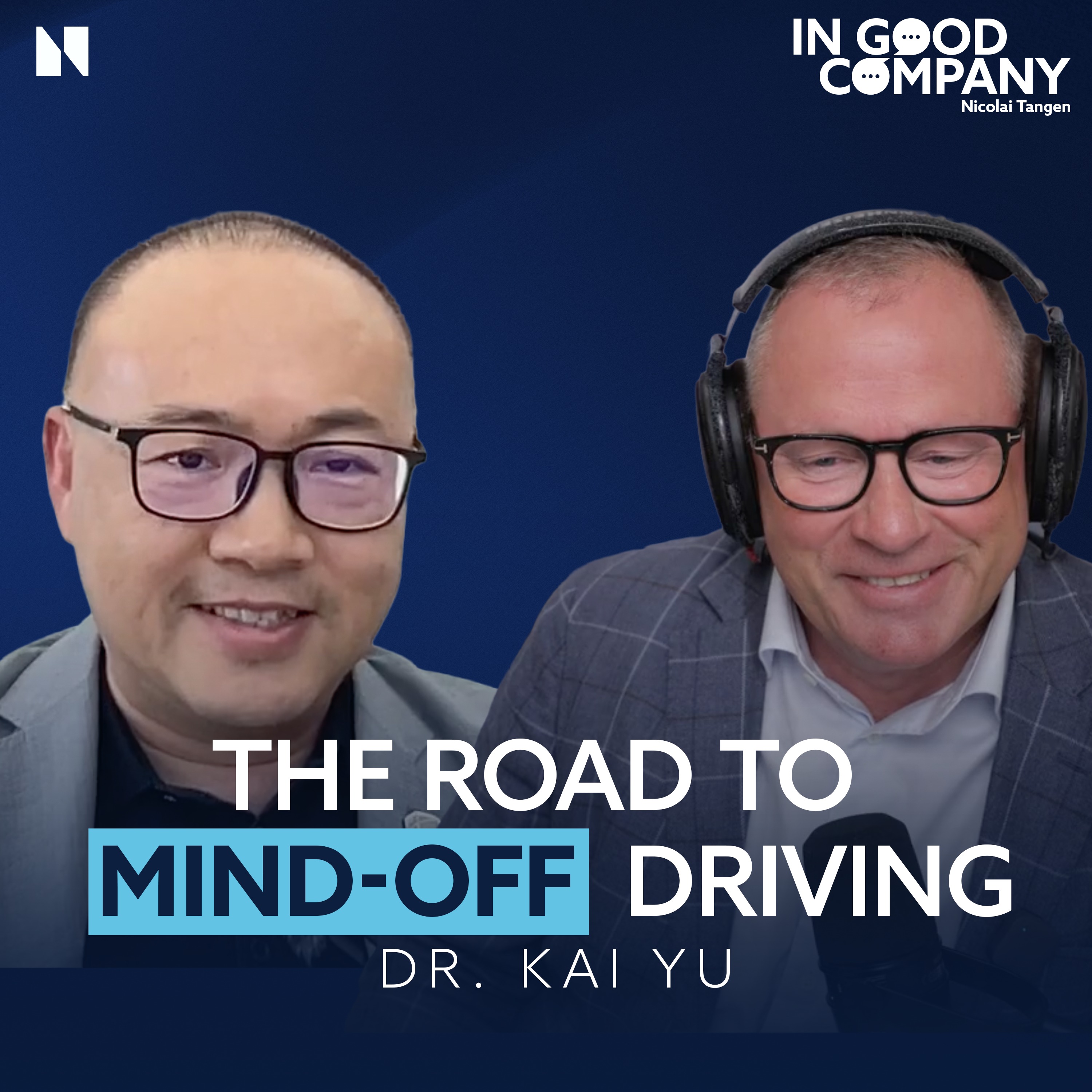
Horizon Robotics Platform
Kai describes Horizon as a robotics-computing platform focused today on passenger cars, with chips and software powering driving functions for Chinese and global automakers.
Platform Over Car Manufacturing
Kai says Horizon avoids building cars so it can serve many brands, and explains how intense competition and demand for smart features shape China's fast-moving car market.
Automotive Chip Barriers
Kai argues that automotive computing has high safety and qualification demands, long development cycles, and slow returns that create strong barriers to new competitors.
Hands-Free Driving Timeline
Kai forecasts hands-free driving in China by the end of 2028, eyes-off driving by 2030, and mind-off driving by 2035, while noting safety validation remains essential.
Compute Data And Models
Kai says autonomous-driving progress depends on a combination of more onboard compute, larger quantities of high-quality driving data, and bigger AI models.
China's Faster Development Cycles
Kai attributes faster Chinese vehicle-platform cycles to intense competition and hard work, and says Horizon's vision-led culture prioritizes innovation and value over imitation.
China's Supplier Ecosystem
Kai says China offers a deep, responsive supplier base that speeds innovation, while emphasizing trusted partnerships, safety standards, and mutually beneficial cooperation with global firms.
Cars And Robotics Converge
Kai expects car-computing and robotics technologies to converge, but says humanoid robots remain early-stage and meaningful commercial volumes may still be five years away.
Humanoid Robot Applications
Kai sees home service, elder care, and labor shortages as important reasons to develop robots, and argues that automotive suppliers can carry advantages into robotics.
Automotive Supply Chain Advantage
Kai argues that competition in automotive supply chains improves components and lowers costs, creating advantages for robotics, and favors cross-border collaboration over zero-sum rivalry.
Robots And Future Cities
Kai imagines robots freeing people from tedious or dangerous work and self-driving cars easing commutes, reducing distance-related constraints, and potentially making roads ten times more efficient.
Kai's Personal Philosophy
Kai reflects on Greek culture, optimism, Zen, and living in the present, describing how he approaches setbacks and balances work with personal happiness.
Advice For Young People
Kai shares his love of food and a book on technology strategy, then advises young people to enjoy what they do while pursuing what they love.
Related Episodes





Important Disclaimers
Not Investment Advice: For education only — not financial, tax or legal advice.
AI-Generated: Made by AI from source transcripts and may contain errors.
No Guarantees: Past performance does not predict future results; investing carries risk.
Our Commentary · Request Removal