Who Wins The AI Assistant Wars? + Why Didn’t Google Build Muse?
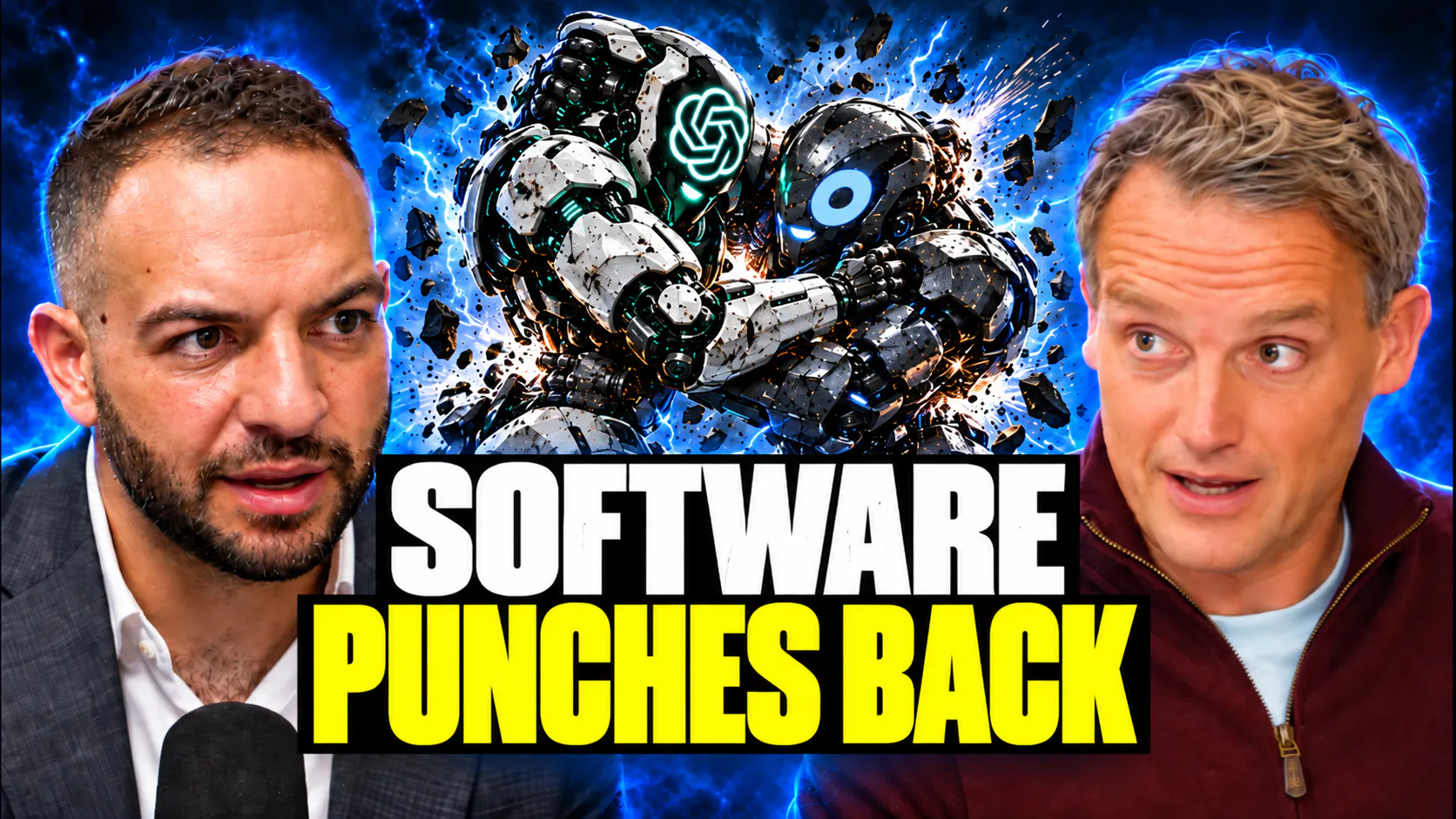
The discussion examines how AI assistants could gain traction through familiar interfaces, proactive help, and services such as bill review, while raising questions about trust, privacy, and subscription churn. It compares Meta, OpenAI, Microsoft, Google, and Apple on product execution and distribution, with cloud-versus-desktop capabilities emerging as another competitive factor. Separate discussion considers banks’ exposure if agents move customer cash, along with Instinct’s rapid fundraising and possible acquisition interest.
Preview · 23 more points in the app
Read the Full SummaryKey Takeaways
The guest argues that LLMs have renewed the push for consumer AI assistants, while familiar messaging services such as WhatsApp could lower adoption friction. Proactive prompts—like handling an inbox message or setting up recurring bill payments—could also help users get past the blank-page problem.
The guest sees AI agents as potential tools for finding household savings by reviewing bills and canceling unused subscriptions, including HBO Max or Netflix. The host also raises a related risk for banks: if agents move cash out of non-interest-bearing accounts, the industry could take a substantial but unquantified hit.
The guest sees Instinct’s independence from major tech companies as a possible advantage amid information silos, but says the startup still depends on outside models and cloud providers and lacks large competitors’ distribution. Assistants may also need access to Gmail and Google Calendar, while users’ reluctance to share those services with Meta illustrates the trust barrier to connected assistants.
The guest describes Meta’s Muse as consumer-focused, Microsoft’s Copilot as more enterprise-oriented, and OpenAI as pursuing a hybrid strategy, while noting uncertainty about whether people will use separate work and home assistants. The speakers cite existing reach—including Meta’s multibillion-user base and OpenAI’s stated 1.2 billion weekly active users—as a distribution advantage; the host predicts OpenAI will win and says Apple could be a dark horse because its AI could reach billions of devices.
The guest says Muse’s cloud computer lets users observe browsing, take control, and access the virtual machine, though security concerns remain. He contrasts that cloud model with desktop workflows involving local files, such as an Excel sheet outside the cloud, and says the balance between cloud and desktop capabilities could help determine which services win.
TECHNOLOGY
“And, you know, in some ways it is, you know, analogous to what we have right now, which is interesting. But obviously, was way too early…”—
“Instinct, I think, wisely recognized that they could sort of get off the ground running fast by simply leveraging already existing messaging paradigms…”—
“Now I feel like you get around that problem again with some level of prompting…”—
ECONOMY
“By the way, there's been some…”—
MARKETS
“Like, VCs feel like they gotta give some love on social media so that they have any shot of, of potentially getting their foot in the door if there happens…”—

Personal Assistant Surge
Siegler revisits his view that no AI assistant had nailed the experience, arguing that new models and familiar messaging interfaces have made the category newly viable.
Instinct’s Proactive Interface
Instinct lowers the barrier to trying an assistant by working through existing chat services and proactively suggesting useful tasks rather than leaving users with a blank prompt.
Bills, Savings, And Churn
The speakers point to bill review and savings as compelling assistant use cases, while warning that agents could prompt customers to cancel subscriptions and move cash.
Banking And Subscription Risk
Agents that optimize balances, rewards, and recurring subscriptions could disrupt banks and subscription businesses that depend on customer inertia.
Assistant Market Contenders
The discussion compares Instinct, Meta, OpenAI, Microsoft, and other entrants, emphasizing the startups’ neutrality but also their limits in funding, infrastructure, and distribution.
Meta Muse’s Early Execution
Amazon’s restrictions illustrate how platform conflicts could constrain assistants, while Siegler says Meta’s standalone Muse product is a surprisingly polished early release.
Consumer Versus Enterprise
Meta appears focused on consumers, Microsoft on enterprise, and OpenAI between the two; the eventual winner may need to reconcile work and personal assistance.
Cloud And Desktop Control
Muse’s dedicated cloud computer can ease some security concerns, but desktop access remains important for tasks involving local files and established workflows.
Distribution And User Trust
Siegler sees first-mover reach and integrations as major advantages, while the speakers discuss how privacy concerns and public perceptions could affect adoption.
Integrations Shape Winners
A large installed base may favor big technology companies, but assistants also need durable access to email, calendars, messaging, and other services.
Anthropic’s Assistant Strategy
Siegler suggests Anthropic may extend Claude Code and Cowork toward assistance, but says the company has historically leaned toward professional productivity over consumer products.
Meta, OpenAI, And Apple
The host favors OpenAI’s product experience and scale, while Siegler highlights Meta’s models and Apple’s device integration as potential competitive advantages.
Apple’s Siri Trust Deficit
Apple has broad access to device context and services, but users may forget or distrust Siri because of its long history of underwhelming performance.
Google’s Assistant Gap
Siegler argues Google has the services and talent to compete but has struggled to ship a compelling, coherent assistant product on time.
Google’s Organizational Friction
Google’s many teams and overlapping assistant efforts can confuse users and hinder execution, despite leadership attempts to unify its AI organization.
Acquisition And Rivalry Outlook
Siegler expects acquisition interest in assistant startups and notes that Amazon, xAI, Microsoft, and other rivals remain part of an unsettled competitive landscape.
Related Episodes


Important Disclaimers
Not Investment Advice: For education only — not financial, tax or legal advice.
AI-Generated: Made by AI from source transcripts and may contain errors.
No Guarantees: Past performance does not predict future results; investing carries risk.
Our Commentary · Request Removal