The UN at a crossroads, with Secretary-General António Guterres
Guterres argues that a more multipolar world requires stronger multilateral institutions, Security Council and Bretton Woods reform, and broader inclusion of emerging economies. He warns that disregard for international law and conflicts such as the Russia-Ukraine war and those in the Middle East carry economic and democratic costs. On AI, he calls for international cooperation, shared guardrails, and transparency to manage risks as competition accelerates.
Preview · 12 more points in the app
Read the Full SummaryKey Takeaways
Bremmer says middle powers including India, Brazil, Turkey, South Africa, and Canada want more influence and see the UN as a shared forum for negotiating rules. Guterres argues that reform should also address emerging economies’ underrepresentation—pointing to China’s roughly 6% IMF quota versus its 20% share of the UN budget—and create opportunities for Africa and the wider global South.
Guterres describes multipolarity as irreversible and says US disengagement from multilateral institutions is facilitating it, while China currently seeks a stronger role in existing institutions rather than leadership of an opposing bloc. He points to EU agreements with India and Mercosur, cooperation with Africa, and a new relationship with Canada as examples of expanding cross-regional ties, and argues that effective multilateral institutions are needed to prevent division into spheres of influence and conflict.
Guterres argues that when Security Council powers violate international law, middle-sized countries may imitate them, creating a cycle of impunity; he also says wars damage the global economy and democratic stability. The episode’s introduction says the US-Iran war has no end in sight and the Strait of Hormuz remains closed, disrupting shipping and spiking energy prices.
GEO-POLITICS
“And with no end in sight to the US Iran war, the Strait Of Hormuz remains closed, spiking energy prices and upending global shipping.”—
“The old superpowers are discovering their limits, while middle and rising powers like India, Brazil, Turkey, South Africa, and Canada are demanding more influence…”—
“But I don't see the BRICS with a organizational structure able create an alternative to the present system…”—
TECHNOLOGY
“Well, at the present moment, artificial intelligence is running without control everywhere or almost everywhere…”—
“I think that it is very important that they recognize, first of all, that governments are the have the primary responsibility for the security of their citizens…”—
“The secretary of treasury of The United States said that he's ready to discuss AI safety with China, and I consider that signal a positive one…”—
ECONOMY
“Because the worst enemy of a democratic government is inflation. When we see prices going up, interest rates going up, people feeling insecure…”—
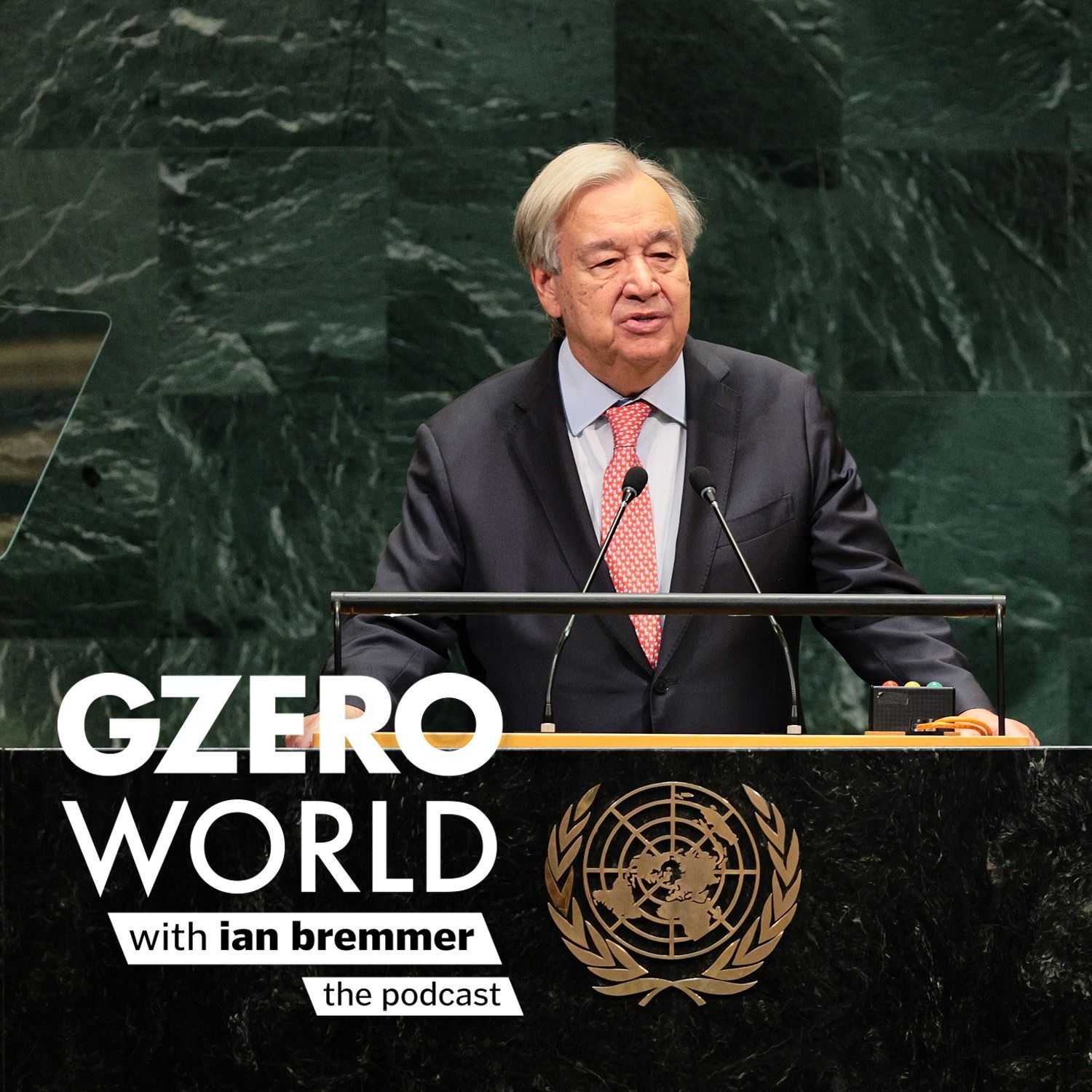
Guterres On The UN
Bremmer introduces Guterres’s final interview as secretary-general, framing the conversation around global instability, UN effectiveness, and the need for institutional reform.
Networked Multipolarity
Guterres describes multipolarity as irreversible and urges cooperation among major and middle powers so that shifting influence strengthens rather than weakens multilateral institutions.
Europe’s Populist Challenge
Guterres argues that European mainstream parties must adapt to new technology and reconnect with citizens, especially young people, to rebuild trust in democracy.
International Law And War
Guterres warns that military power has limits and that wars bring global economic and human costs, while disregard for international law encourages impunity.
AI Guardrails And Cooperation
Guterres calls for governments to take responsibility for AI safety and for leading countries to share information, establish guardrails, and coordinate development to avoid catastrophic risks.
UN Legacy And Democratic Costs
Guterres says major-power war is not inevitable, but identifies worsening disrespect for international law as a defining setback whose conflicts fuel inflation and threaten democratic stability.
Related Episodes





Important Disclaimers
Not Investment Advice: For education only — not financial, tax or legal advice.
AI-Generated: Made by AI from source transcripts and may contain errors.
No Guarantees: Past performance does not predict future results; investing carries risk.
Our Commentary · Request Removal