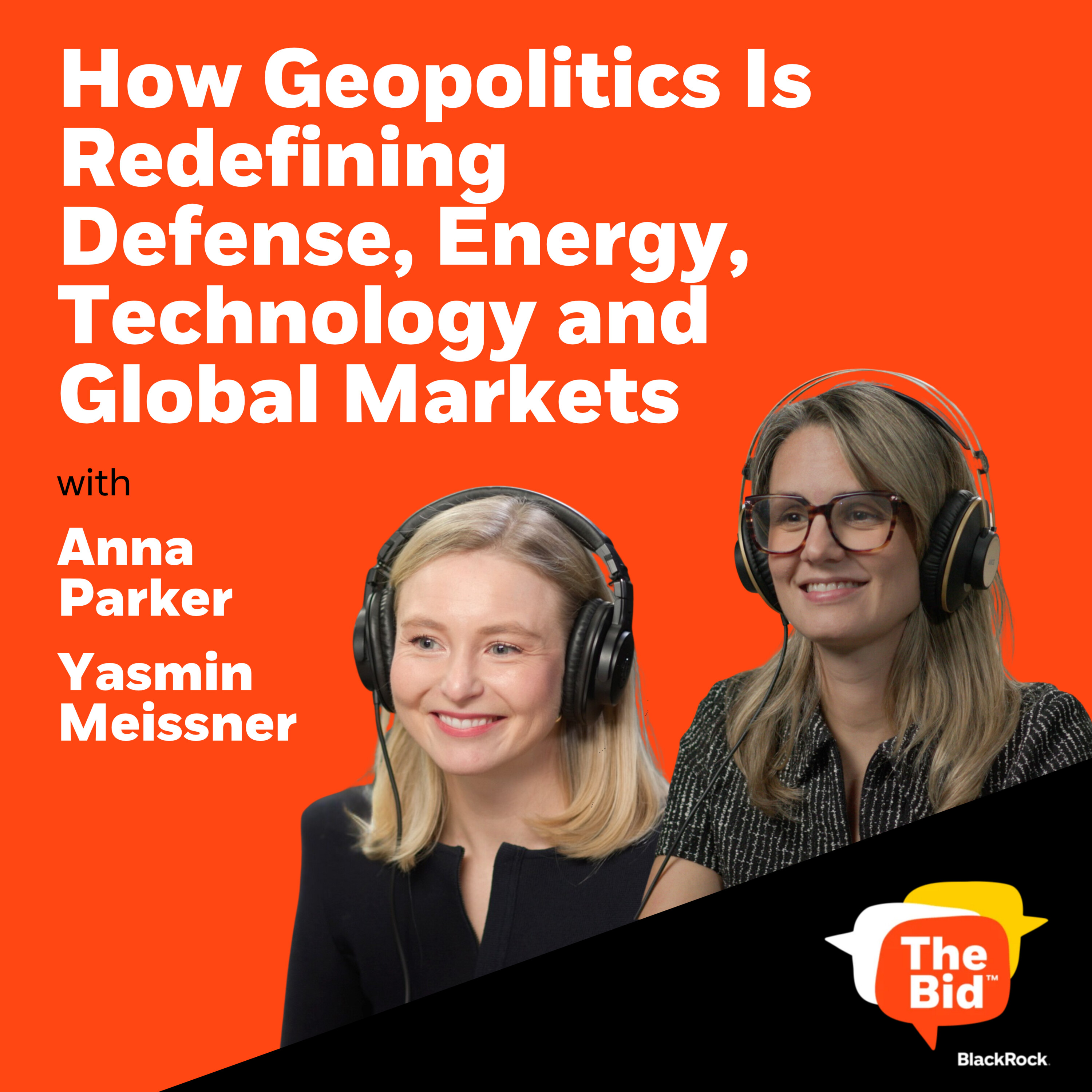
275: How Geopolitics Is Redefining Defense, Energy, Technology and Global Markets
Parker describes intensifying US-China competition and geopolitical fragmentation as forces reshaping defense supply chains, energy security, and technology. The discussion highlights vulnerabilities—from costly air-defense replenishment and rare-earth dependence to Taiwan's semiconductor role—alongside efforts to build more resilient capacity. AI investment is increasingly drawing on credit markets, while energy supply has recovered unevenly: oil exports rebounded, but refined fuels remain under historic strain.
Preview · 12 more points in the app
Read the Full SummaryKey Takeaways
Parker describes US-China competition, especially in AI, as a durable force driving geopolitical and economic fragmentation, while noting that neither country can currently build the entire AI technology stack alone. She frames technology sovereignty as managed interdependence: countries may still rely on foreign chips or models while seeking domestic compute, protecting sensitive data, and securing crisis-time access to inputs.
Geopolitical exposure is prompting efforts to diversify critical supply chains: China mines about 60% and refines more than 90% of rare earths, while Taiwan produces more than 90% of the world’s semiconductors. The US is partnering with Australia and Japan on alternative rare-earth supply and is willing to set a price floor at more than double the market price to encourage production.
The episode highlights a mismatch between low-cost, rapidly evolving drone threats and costly, slow-to-replenish defenses: drones can cost around $50,000 versus about $5 million for a Patriot interceptor, whose lead times can exceed two years. Ukraine’s capacity to produce up to 8 million drones annually and its six-week battlefield learning cycle reinforce the stated need for flexible defense supply chains, while a company’s microwave-based system illustrates one counter-drone approach.
GEO-POLITICS
“What I think actually is the most important theme here is around the way that the global economy is rewiring to focus more on resilience, and that's happening as a…”—
“First is exposing the vulnerabilities in the global economy that stem from dependency and the ways that those dependencies can become weaponized in times of geopolitical conflict or stress…”—
“There was a CBO study that came out recently, which said up to two thirds of The US Patriot interceptors have now been used during the course of this conflict…”—
TECHNOLOGY
“One of the companies that they met produces counter drone technology by using microwave fields. So the idea is you create an interference field…”—
“SpaceX has had a very important role to play here. It has brought launch costs down. Why does that matter for the US military?…”—
“The military is increasingly trying to move towards creating this software that becomes this sort of architecture of their whole military system…”—
MARKETS
“So Anna talked about the ways in which some of the big US hyperscaler companies are investing huge amounts in AI…”—
“And I think it's been remarkable to see how resilient the global energy market has actually been amidst record disruption…”—
Geopolitical Fragmentation
Parker argues that competition, fragmentation, and repeated shocks are prompting countries to reduce strategic dependencies and build resilience across energy, defense, and technology.
Resilience Economy Investing
Meisner connects energy, defense, and AI, noting their competition for capital and the portfolio choices investors face across asset classes and economic regimes.
Hormuz Energy Disruption
Parker describes how pipelines, strategic stockpiles, and China’s reduced oil imports softened the supply shock, while warning that buffers are thinning and refined fuels remain strained.
Defense Replenishment And Innovation
Meisner highlights costly, slow-to-replace air-defense interceptors and companies developing scalable counter-drone systems, adaptable supply chains, and new military uses for space.
AI Sovereignty And Supply Chains
Parker says US-China competition spans the AI technology stack, but global dependencies persist; other countries are pursuing managed interdependence through local models, compute, and secure inputs.
Rare Earths And Taiwan Chips
Meisner identifies rare-earth processing and Taiwan’s semiconductor production as strategic choke points, alongside energy infrastructure, and says investors should track access and geopolitical leverage.
Strategic Portfolio Implications
The host concludes that geopolitical shifts have lasting implications for portfolio allocation, regional exposure, and risk beyond the short-term market reaction to headlines.
Related Episodes



Important Disclaimers
Not Investment Advice: For education only — not financial, tax or legal advice.
AI-Generated: Made by AI from source transcripts and may contain errors.
No Guarantees: Past performance does not predict future results; investing carries risk.
Our Commentary · Request Removal